

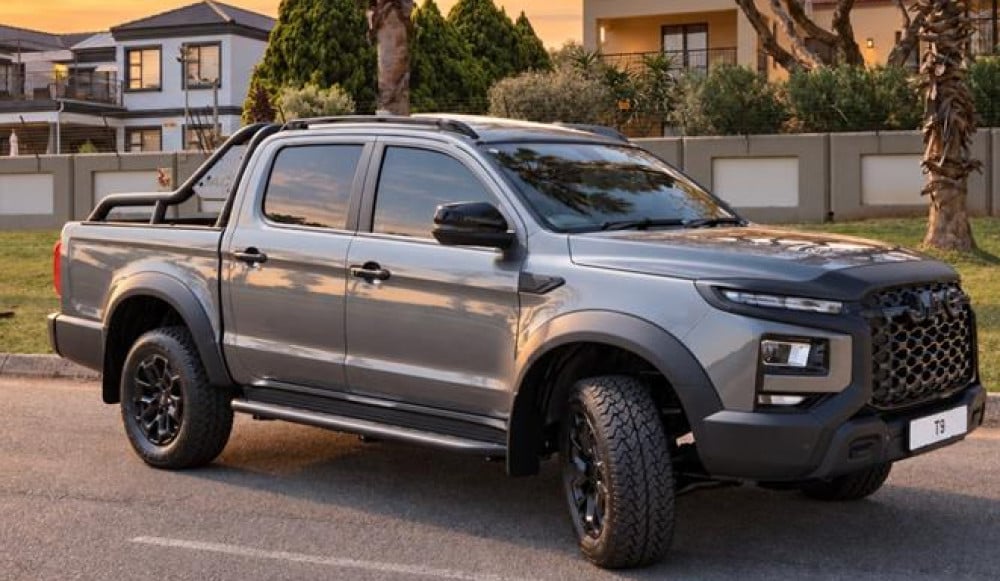

The payload controversy with the Jetour T1 and T2 models is not going away and recent testing of the vehicles involving the the Automobile Association (AA) of South Africa and the National Regulator for Compulsory Specifications (NRCS) has raised concerns about the payload ratings.
The testing, carried out at the Clayville Testing Centre in Gauteng recently, came after the AA questioned the validity of the NRCS’s approval of a revised payload capacity of 475 kg, inclusive of the driver, for the T1 and T2 passenger vehicles. The NRCS subsequently consulted the AA and implemented independent payload testing for the Chery Group models.
The AA’s concerns centred on three issues: the validity of the revised payload figure, which increased from an initial rating of 300 kg to 475 kg without mechanical upgrades; the application of the rating to both new and existing models; and the NRCS’s reliance on global laboratory reports submitted by the automaker rather than local, independent verification.
Weighbridge results for the T1 Odyssey 2.0TD showed an actual weight of 1 780 kg, a revised gross vehicle mass (GVM) of 2 308 kg and a payload variance of 538 kg. The T1 PHEV 1.5T recorded an actual weight of 1 940 kg, a revised GVM of 2 448 kg and a payload variance of 508 kg. For the T2 range, the Odyssey 2.0T returned an actual weight of 1 880 kg, a revised GVM of 2 380 kg and a payload variance of 500 kg. The T2 PHEV 1.5T showed an actual weight of 2 060 kg, a revised GVM of 2 538 kg and a payload variance of 478 kg. The T2 Xplora 2.0T recorded an actual weight of 1 900 kg, a revised GVM of 2 355 kg and a payload variance of 455 kg, falling 20 kg below the updated 475 kg rating claimed by Jetour.
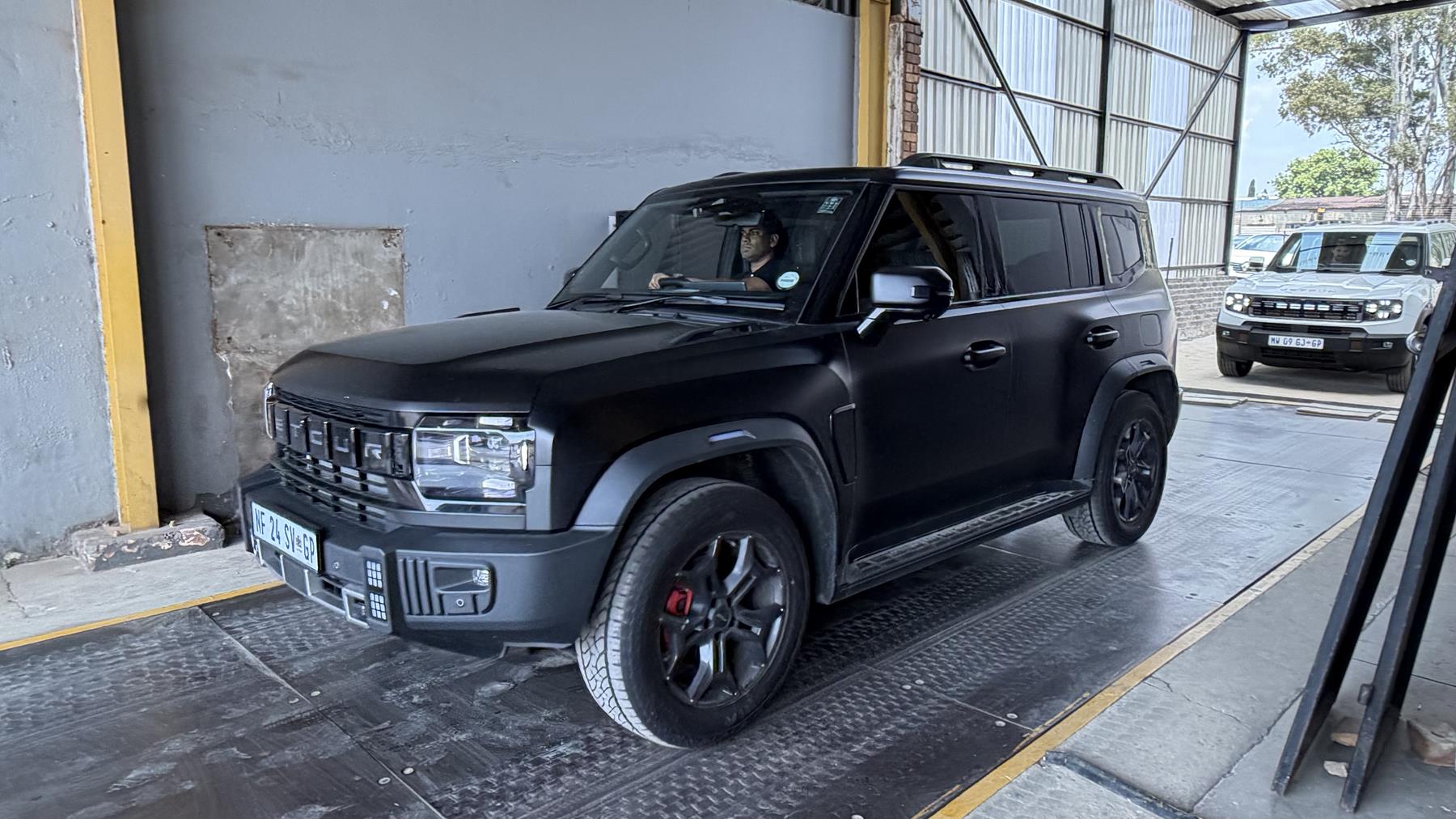
A full range of Jetour models can be found here
The AA has asked Jetour for clarity on the Xplora result and has reminded owners of that model to bear the rating in mind when loading their vehicles.
A further concern is the NRCS has confirmed Jetour’s application for the revised payload rating for the T1 is still in the approval process. This means both new and existing T1 customers remain subject to the vehicle’s original homologated payload rating of 300 kg. This contradicts the automaker’s statement at the end of August that, based on approval obtained from the NRCS, the approved payload capacity applicable to the relevant Jetour T1 and T2 model range was 475 kg, inclusive of the driver.
The AA also noted the absence of mechanical upgrades accompanying the revised payload submission. Jetour has said the T2’s structural platform was engineered and validated from the outset to withstand technical masses considerably higher than its original 300 kg global payload rating. The AA maintains that increasing a payload by almost 200 kg, a 58% increase, without attention to structural integrity remains a safety concern for local owners.
The AA has confirmed that a solution for updated licensing of existing T1 and T2 cars reflecting the revised GVM numbers has not been reached with the road traffic authorities. Existing owners are therefore still subject by law to the lower weighting listed on their licence discs at a roadblock or weighbridge.
The AA has called on Jetour to issue a recall notice to all affected customers advising them of the legislative and law-enforcement risks associated with the licence disc weight rating. Owners currently face recourse from traffic authorities in a roadblock should a concern be raised about the weighting applied to the vehicle, and the AA expects the end-of-year holiday season to heighten this concern.
Good insurance is vital – click here to find out more
In closing, the AA reiterated its position on the NRCS. It said that, as a regulator for compulsory specifications, relying on global laboratory test reports to ratify local approval processes is not good enough for the local consumer.
The AA said the fact the NRCS could independently request testing in this instance for the T1 and T2 demonstrates what can and should be done as standard practice in the interest of consumers. It has again called on the NRCS and bodies such as the CSIR to mandate meaningful local homologation testing for all new entries into South Africa as a matter of urgency.
Jetour had not responded to our request for comment when we went to press.
Colin Windell for Colin-on-Cars in association with
proudly CHANGECARS