




South Africans are being warned to prepare for a scorching summer as weather experts predict the return of a strong El Niño, bringing with it higher temperatures, drier conditions, and increased risks for motorists and communities across the country.
The South African Weather Service (SAWS) has placed the probability of a strong El Niño at more than 95%, with ocean temperature anomalies expected to push the season into the "very strong" category. Independent weather forecaster Juandre Vorster, known as The Weather Hooligan, says while there is no need for panic, the coming months will demand preparation rather than fear.
"The biggest concern is not simply soaring temperatures," Vorster said. "It is what they could mean for already strained water supplies, agriculture and public health”.
Don't get all heated looking for your new car - just click here
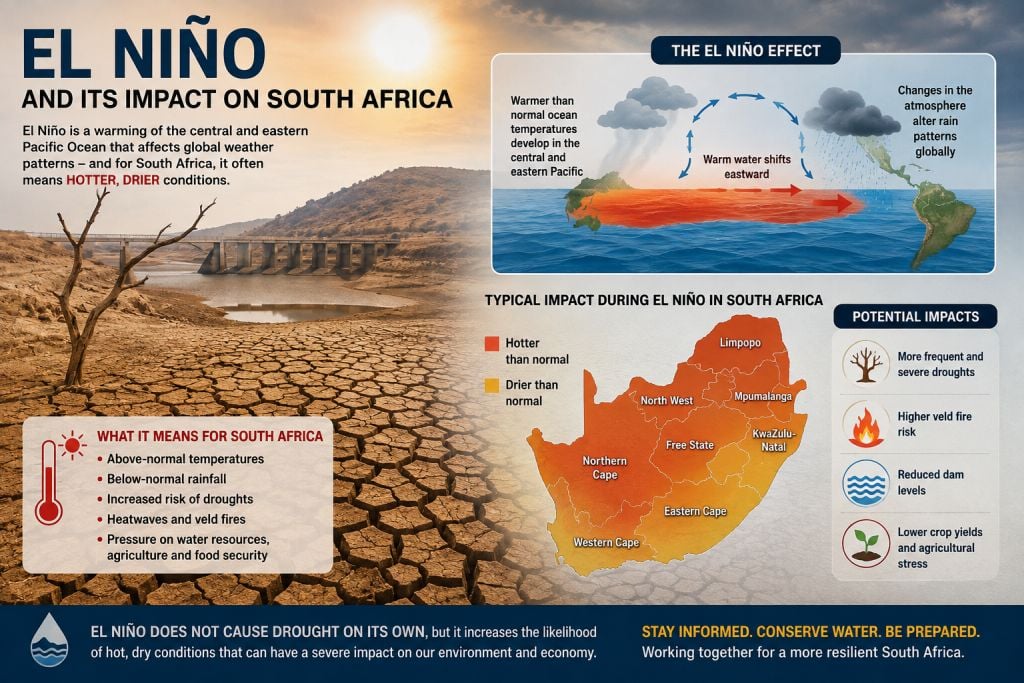
El Niño is a natural climate pattern that begins in the tropical Pacific Ocean when sea surface temperatures rise above normal levels. The phenomenon typically brings warmer and drier conditions across South Africa's summer rainfall areas, including Gauteng, Free State, Northwest, Mpumalanga, Limpopo, KwaZulu-Natal and the eastern parts of the Eastern Cape.
Prolonged heatwaves place significant strain on the body, particularly for vulnerable people and extreme heat increases the risk of dehydration, heat exhaustion, and heatstroke, particularly among children, older adults, and people living with chronic illnesses.
Children face significantly higher risks than adults due to their physiology. A child's body temperature can rise faster than an adult's because their bodies generate more heat during activity and their sweating mechanisms are less developed. Vital organs begin to fail once a child's core temperature reaches 40°C.

Working off a budget - click here and see our selection of low price vehicles
The psychological toll of extended heat should also not be underestimated and there is strong evidence sustained high temperatures contribute to irritability, fatigue, poor concentration and disrupted sleep, so after several days of inadequate rest, people become less emotionally resilient, more prone to conflict and often experience increased anxiety.
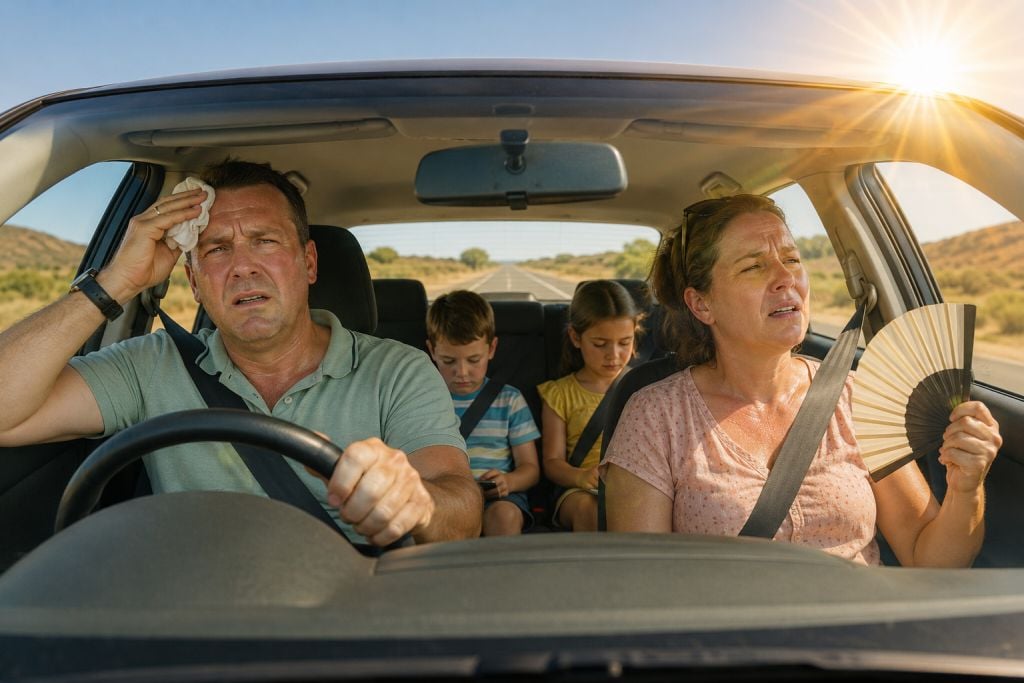
With South Africa's car-dependent cities, motorists will feel the impact first. MasterDrive CEO Eugene Herbert says extreme heat pushes vehicles to their limits, and drivers need to take precautions before, during, and after their journeys.
Key pre-trip checks include inspecting coolant levels and topping up if necessary. "Your engine will be working overtime in this heat," Herbert says. "Be aware that most modern systems are sealed, thus if in doubt, visit your dealership or consult an expert such as an approved RMI workshop”.
Other essential checks include oil levels, batteries, and tyres. Extreme temperatures can cause oil to thin and lose viscosity, while heat accelerates battery degradation. Tyres also need special attention because heat causes air to expand, which can lead to blowouts if tyres are overinflated or worn.
Sun protection inside the vehicle is another consideration often overlooked. "While windshields are more effective at blocking most UV rays, side and rear windows often do not. They allow harmful UVA rays to penetrate the vehicle which increases skin cancer risk, particularly on the right side of the body of people that spend considerable time driving," Herbert explained.
Looking for a safe car for a student then click here
Drivers should keep air conditioning running at optimum by using recirculation mode rather than pulling in hot outside air. "In older vehicles, give your AC occasional breaks for a few minutes every hour to prevent overheating," Herbert advised.
Staying hydrated while driving is critical, as dehydration can impair concentration and reaction times. Drivers should also watch dashboard warning signs with extra vigilance. If the engine overheats, pull over safely and call a mechanic to avoid further damage.
The tragic death of a three-year-old girl left inside a locked car at Seshego Hospital in Limpopo in October 2025 serves as a stark reminder of the dangers of hot vehicles. The child was left in the car around 07:00 while her mother attended a handover session and was found unresponsive hours later.
The speed at which vehicles become death traps is alarming. In just 10 minutes, a vehicle's interior temperature can rise by more than 10°C, even with windows cracked open. Parking in the shade offers little protection when temperatures soar, and the air conditioning effect vanishes within minutes once the engine is switched off.
Emergency services recommend adopting a strict rule: never leave a child (or pet) unattended in a vehicle—even for a moment. Simple memory triggers can help prevent tragedies, such as placing a handbag, mobile phone, or laptop in the back seat so you're forced to check before leaving the vehicle.
If you spot a child in distress inside a vehicle, emergency services recommend calling ER24 on 084 124 or the police on 10111. Remove the child from the vehicle, loosen clothing, move them into the shade, and cool them with water—but avoid ice baths. Remain with them until help arrives.
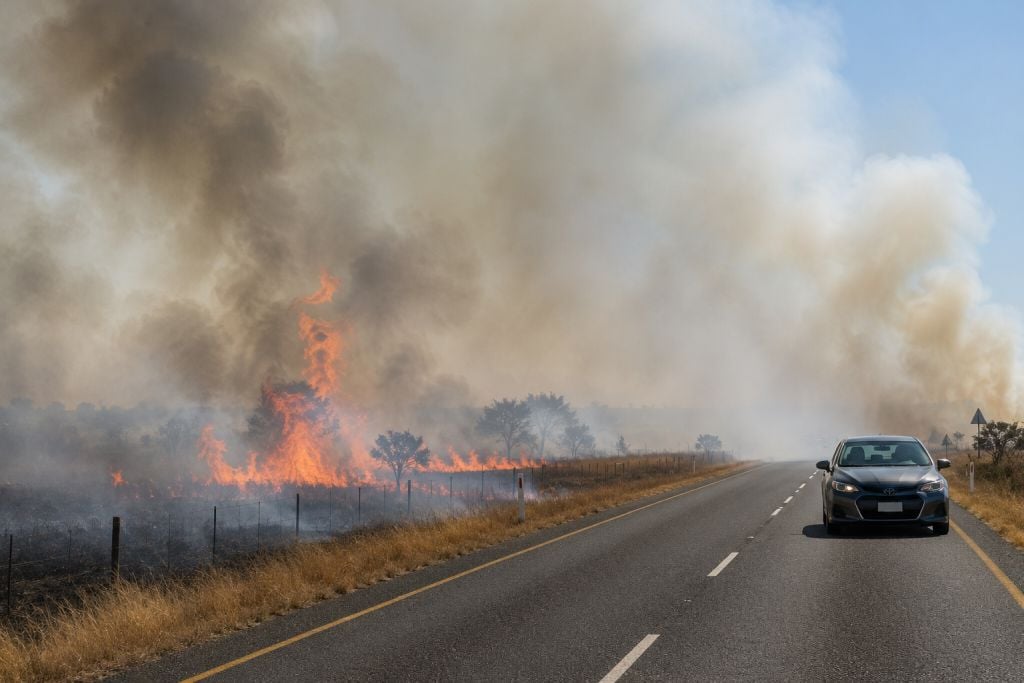
The combination of dry conditions and elevated temperatures increases the likelihood of veld fires and roadside flare-ups. The City of Cape Town notes that wildfires are a common occurrence during the dry season and represent a significant threat to life, property, and the environment.
Motorists should prepare for sudden smoke, reduced visibility, and emergency detours. Safety essentials include an emergency kit with water, snacks, a basic first-aid kit, and a small fire extinguisher. Drivers should avoid stopping near dry grass when engines are hot, as catalytic converters can ignite vegetation.
Starting or running a small business and in need of a bakkie – click here
Residents living near urban fringe areas face greater wildfire risk and are advised to keep proper fire breaks around properties, keep vegetation height as low as possible, and clear debris from roof surfaces and gutters.
If caught in a wildfire, the City of Cape Town advises avoiding smoke inhalation by keeping low to avoid rising smoke, taking short breaths through the nose until reaching safety, and covering the face with a damp cloth or handkerchief.
The El Niño is forecast to persist until at least March or April next year, with the possibility of extending further if it reaches its peak around December. Conditions often improve once the system enters its weakening phase.
Colin Windell for Coin-on-Cars in association with
proudly CHANGECARS
Images are AI generated